
Xylofagou
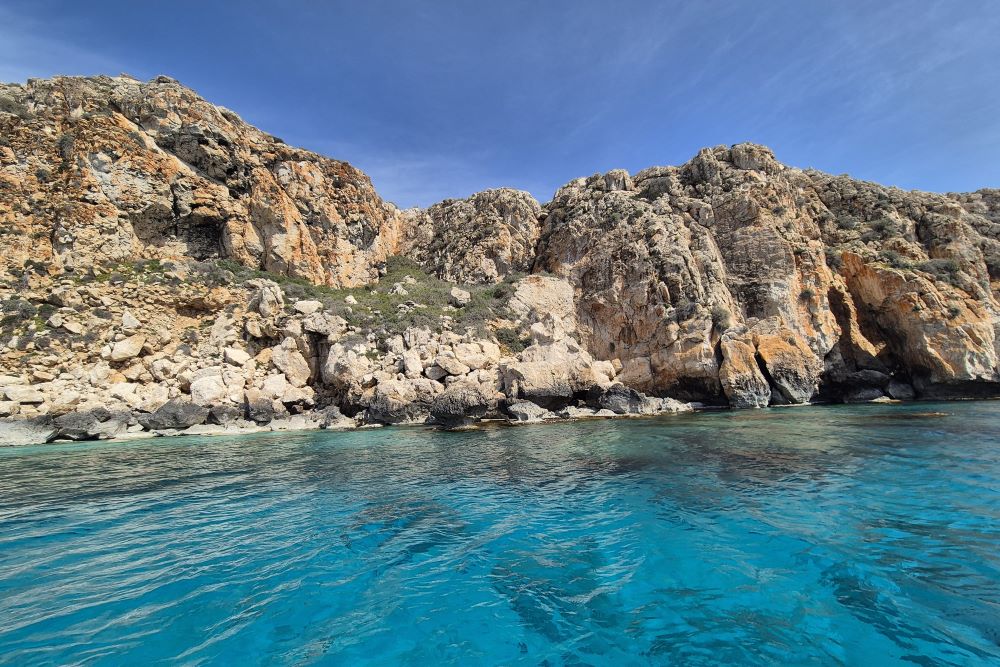
Xylofagou village combines stunning coastal caves with a rural character as part of the famous ‘Kokkinochoria’ villages (red soil villages), named for the copper rich soil that grows some of the island’s best produce.
Located near Cape Pyla, its underwater landscape with rocky formations and rich marine biodiversity is ideal for all levels of diver. The Skopia dive site can be explored virtually here, and its hidden coves and sea caves can be reached from the idyllic, small fishing shelter where the local fishermen work, or via a guided kayaking tour.
One of the diving caves - Mavrospilios - features rare stalactites and stalagmites (entrance about three meters below the sea's surface and accessible only to divers). The 'Cave of Agioi Saranta' (Forty Saints) is located where the cliff drops steeply into the sea, and where fossilised hippopotamus bones have been discovered. Equally impressive is the 'Cave of Eglezou' (Cave of the English Person), where fossils were found by British paleontologist Dorothy Bate in 1903, hence its name.
Historical sites include the Venetian Watch Tower that is part of a network of towers across the region, and also included in the Larnaka Thematic Cycling Routes - Venetian Watchtower Route East, and two churches; Agios Georgios and Panagia tou Syrmatou.
The restored 15th-century Church of Agios Georgios is located in the village centre and preserves remarkable frescoes.
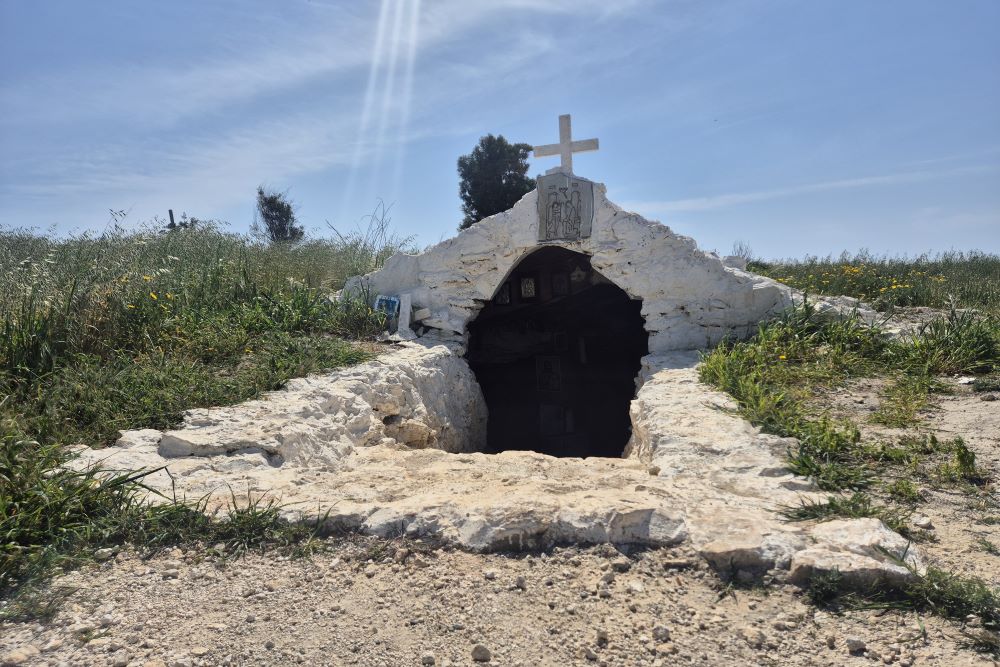
The picturesque chapel of Panagia tou Syrmatou is set against a beautiful backdrop of acacia trees overlooking the sea with a cave nearby and a designated picnic site.
The famous 'the big potato' statue that pays homage to the red soil has become a popular spot for a selfie. The potato crop is also celebrated with an annual festival each September.